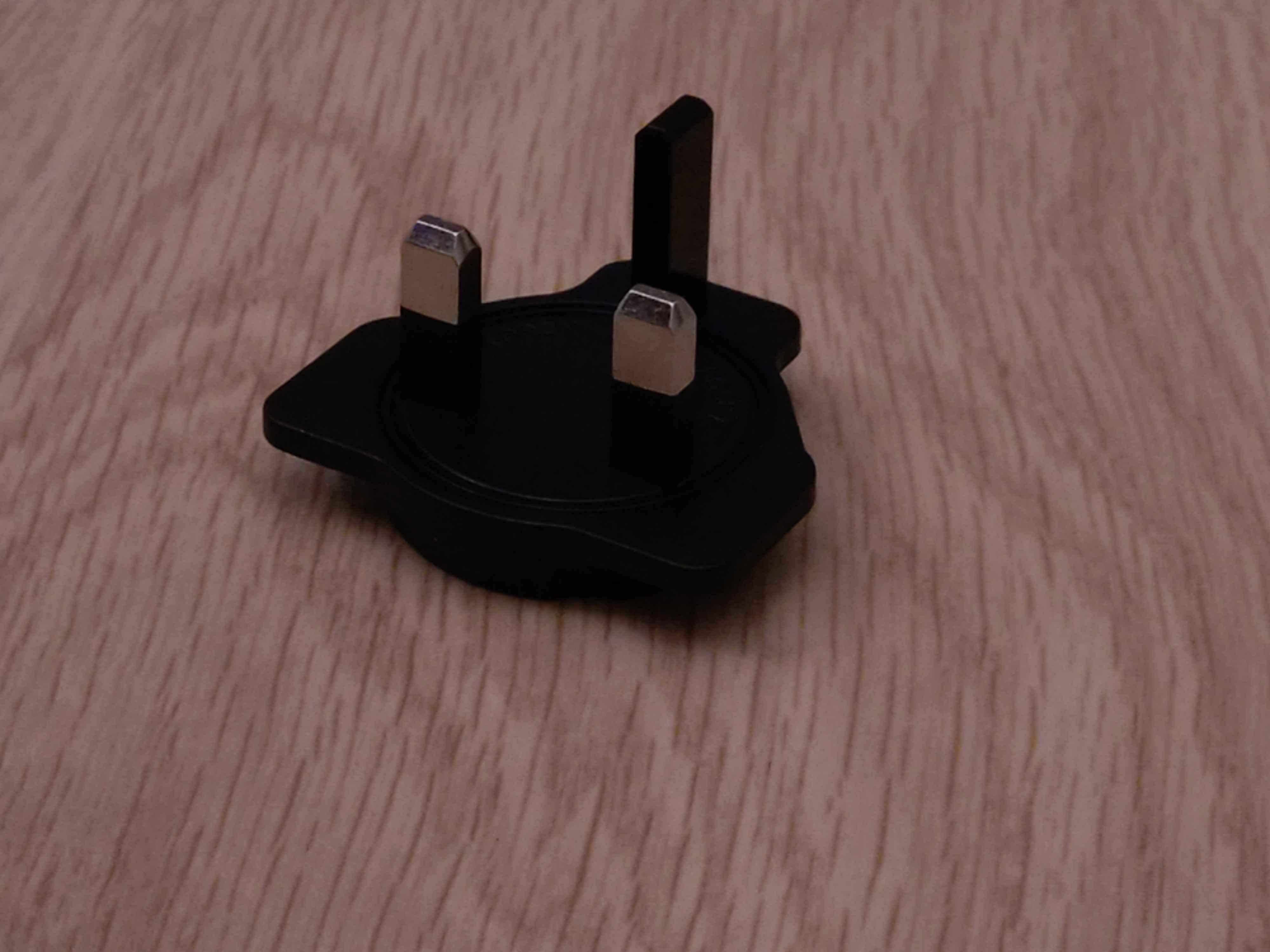
People who joke about legos haven't stepped on this bad boy
Home to all things "Mildly Infuriating" Not infuriating, not enraging. Mildly Infuriating. All posts should reflect that. Please post actually infuriating posts to !actually_infuriating@lemmy.world
I want my day mildly ruined, not completely ruined. Please remember to refrain from reposting old content. If you post a post from reddit it is good practice to include a link and credit the OP. I'm not about stealing content!
It's just good to get something in this website for casual viewing whilst refreshing original content is added overtime.
Rules:
1. Be Respectful
Refrain from using harmful language pertaining to a protected characteristic: e.g. race, gender, sexuality, disability or religion.
Refrain from being argumentative when responding or commenting to posts/replies. Personal attacks are not welcome here.
...
2. No Illegal Content
Content that violates the law. Any post/comment found to be in breach of common law will be removed and given to the authorities if required.
That means: -No promoting violence/threats against any individuals
-No CSA content or Revenge Porn
-No sharing private/personal information (Doxxing)
...
3. No Spam
Posting the same post, no matter the intent is against the rules.
-If you have posted content, please refrain from re-posting said content within this community.
-Do not spam posts with intent to harass, annoy, bully, advertise, scam or harm this community.
-No posting Scams/Advertisements/Phishing Links/IP Grabbers
-No Bots, Bots will be banned from the community.
...
4. No Porn/Explicit
Content
-Do not post explicit content. Lemmy.World is not the instance for NSFW content.
-Do not post Gore or Shock Content.
...
5. No Enciting Harassment,
Brigading, Doxxing or Witch Hunts
-Do not Brigade other Communities
-No calls to action against other communities/users within Lemmy or outside of Lemmy.
-No Witch Hunts against users/communities.
-No content that harasses members within or outside of the community.
...
6. NSFW should be behind NSFW tags.
-Content that is NSFW should be behind NSFW tags.
-Content that might be distressing should be kept behind NSFW tags.
...
7. Content should match the theme of this community.
-Content should be Mildly infuriating. If your post better fits !Actually_Infuriating put it there.
-The Community !actuallyinfuriating has been born so that's where you should post the big stuff.
...
8. Reposting of Reddit content is permitted, try to credit the OC.
-Please consider crediting the OC when reposting content. A name of the user or a link to the original post is sufficient.
...
...
Also check out:
Partnered Communities:
Reach out to LillianVS for inclusion on the sidebar.
All communities included on the sidebar are to be made in compliance with the instance rules.
People who joke about legos haven't stepped on this bad boy
So your argument is that if you remove a necessary safety features the system is suddenly less safe. Well fucking shocker. That's no different from me saying that if you used a ring breaker on a Japanese branch, it would be exposed to 30A and just as dangerous, and therefore concluding the Japanese system must be worse.
It's a stupid hypothetical that tells you nothing about either system.
Also, at the point where a device is drawing short circuit current, EITHER breaker will trip most instantly, and whether the threshold is 30 or 20, the device is a smoking pile of burnt plastic afterwards anyway.
And again, breakers aren't designed to protect devices, and devices aren't designed to withstand some kind of massive fault tolerance based on the circuit they're plugged into. No device on planet earth is designed with the concept of "it has to survive even when a 20A short circuit happens. And even if so, it would just be "short circuit" in general. Because as I've pointed out, a dead short will trip EVERY breaker, instantly,, period. As I've pointed out repeatedly, 7A rated power cords are completely legal to sell for use on 20A Japanese outlets.
But if I'm wrong feel free to correct me. But specifically. I want specific and concrete measures and steps that you aledge are taken specifically to guard devices based on the fusing of the circuit they are attached too.
Sure, the current on one ring is greater than that on one branch, that's is true, I'll concede that. I just consider it irrelevant. The total current coming in at the terminal connection though is half as much in the UK than the US. The US commonly has 100, 150 or 200Amp service panels.
No it doesn't. Because you're laboruimg under the delusion that breakers are designed to protect anything beyond the internal wiring of your walls. They don't give a shit about anything else. That is their singular and sole purpose. Look for example at America. America has UNFUSED multi cords rated for 7A. There's literally nothing stopping you in America from plugging a 7amp rated extension cord, into a 20A outlet, plugging in two space heater on max and a third one on low, and pull 18-19 amps through a cord rated for 7, and no fuse or breaker is going to stop you from doing that. So quite demonstratably, at minimum one part of the rest of the world very much does NOT safely use unfused plugs.
The code HAS those fuses, and with those fuses it is safe. Safer than a central breaker system in fact. You can't just keep racking caveats changes and asterisks onto the UK electrical code and then laughing at how unsafe is. Every single arguement you make where you need to exclude/ignore safety features that the UK system has, is in fact an argument in favour of the system.
A power cord intended for a 16A EU appliance would be illegal to sell in the UK without an 15A fuse in the plug. Problem solved.
Again, you can't argue the system is less safe when you keep needing to ignore safety devices to make that argument. I could just as well as say that without your indivisible branch breakers, the Japanese system is unsafe, and the UK manages to work perfectly safely without individual branch breakers. According to you, this is valid logic to demonstrate the Japanese system is worse than the UK system, and every time you mention branch circuits or branch breakers it just strengthens my point.
I can just as easily flip that argument, about the UK safely using ring circuits with plug fuses, whilst the rest of the world needs to use branch breakers to keep their branches limited in size.
You're literally just talking about the fact that the unique system in the UK requires unique safety features. That is itself value neutral, and adds nothing of relevance.
Considering you were arguing that Japanese plugs need to handle LOWER current, when in reality it's the exact opposite, they have to handle HIGHER current, I'd say it's an accurate observation. The most common standardised all purpose plug in the UK is fused at, and rated for 13 Amps. Well below a 20Amp. Japanese circuit.
Your caveat is wrong. The baseline leakage current is affected predominantly by voltage and cable length. A 20 Amp circuit and a 100A circuit could both perfectly adequately and safely be protected by a 30mA RCD.
Relevant to the issue at the time, which was you claiming the outcome of electric shock changes based purely on the amperage rating of the cable used.
So the entire core of your argument, other countries not needing fuses in cables/plugs has just gone poof then.
I'd like to a citation for the claim that appliances need to be withstand the Maximum current in a fault case. Also what "withstands" is even supposed to mean in this context.
But In my opinion, even if that's the case, that's a point in FAVOUR of UK plugs. You can receive literally the IDENTICAL level of safety by making the appliance 3A fault tolerant, and giving the plug a 3Amp fuse.
Isn't the ability to make every device individually fault taulerant so much better than needing make them all fault tolerant to the max current.
It's also far safer abroad, because you're literally taken the fuse in the device with you. According to you, what happens when a device designed for a 16 Amp EU socket is plugged via adapter into a 20A Japanese socket. Now suddenly it has inadequate fault protection. Do the same thing with a UK socket, and it maintains the exact same level of fault tolerance it's always had.
So if you agree with all my points then what exactly is your issue with the UK ekectric code ?
It seems to me that your entire grape is based around the fact that the same safety features are achieved differently in the UK, and you never argue about those safety features being worse, you simply point out that they are necessary, and somehow that makes the system worse. Also, small current fuses are arguably safer than circuit breakers. You can't detect a defective breaker, until it fails to actuate at excess current. A defective fuse would just be broken, and not allow a circuit to form in the first place.
Again, the topic of discussion is "Why does the UK need these plugs, when the rest of the world doesn't?"
To understand that topic, we do, actually, need to consider the dangers of the UK using the kind of plugs used in the rest of the world.
No, the topic is the UK electric code not being safe.
You're literally arguing that merely BECUSE the code needs safety devices it is therefore unsafe, which is utter nonsense.
"Unsafe" is not the correct term. "Unsafe" implies an absolute condition. The UK system is not "unsafe", and I have not argued that it is "unsafe".
"Less safe" is the more accurate description. "Less safe" implies a relative condition. The UK system is "safe enough", even though their household wiring - the wiring between the breaker and the outlet - is significantly "less safe" than household wiring around the world.
A fault between the breaker and the outlet in most of the world develops 2000-4000 watts before a breaker can be expected to trip. Japan's 20A @ 100V is on the lower end; EU's 16A @ 240V is on the higher end of that scale. 2000-4000 watts arcing at a faulty terminal. 2000-4000 watts that can only be dissipated by various potentially flammable building materials around the faulty device.
In the UK, it's not 2000-4000. It's 7200 watts. A similar fault can deliver substantially more energy to those flammable building materials, increasing the risk of fire.
North America mitigates such risks in its 7200 watt (60A @ 120V, 30A @ 240V) circuits by minimizing the number of connections; the number of places where a fault can potentially develop. We don't allow multiple outlets: these circuits must be dedicated to a single, special-purpose outlet only. Europe, Japan, and the rest of the world have similar requirements for such circuits. The UK goes ahead and daisychains their 7200W circuits throughout the home.
By that metric, the household wiring is, indeed, "less safe" than competing circuits around the world. By that metric, UK household circuits are, indeed, substandard, even before they eschew simple straightforward branch topology for rings, which introduce a variety of complex failure modes that can easily overload household wiring.
The "less safe" condition of UK wiring necessitates additional protections at and after the outlet. The safety measures employed in the rest of the world are inadequate to mitigate the dangers posed by the UK's 7200 watt household circuits.