this post was submitted on 16 Dec 2025
140 points (96.7% liked)
Selfhosted
53705 readers
694 users here now
A place to share alternatives to popular online services that can be self-hosted without giving up privacy or locking you into a service you don't control.
Rules:
-
Be civil: we're here to support and learn from one another. Insults won't be tolerated. Flame wars are frowned upon.
-
No spam posting.
-
Posts have to be centered around self-hosting. There are other communities for discussing hardware or home computing. If it's not obvious why your post topic revolves around selfhosting, please include details to make it clear.
-
Don't duplicate the full text of your blog or github here. Just post the link for folks to click.
-
Submission headline should match the article title (don’t cherry-pick information from the title to fit your agenda).
-
No trolling.
-
No low-effort posts. This is subjective and will largely be determined by the community member reports.
Resources:
- selfh.st Newsletter and index of selfhosted software and apps
- awesome-selfhosted software
- awesome-sysadmin resources
- Self-Hosted Podcast from Jupiter Broadcasting
Any issues on the community? Report it using the report flag.
Questions? DM the mods!
founded 2 years ago
MODERATORS

I wouldn't recommend network apps to a complete beginner. They might loose their network for a while and get afraid of tinkering. My 2p
I'd recommend technitium over both pihole and adguard these days. Its an actual DNS server vs just a sinkholr, had recursive resolving out of the box, Root server mirroring at the click of a button, cluster mode etc
I'm using Pi-hole for half a year now and am super happy. What is unbound?
A DNS service that gets all its DNS data directly from "root servers", without the middlemen (like your ISP, Google, Cloudflare, etc).
Unbound is just an alternative to bind. Pihole does not handle full-fledged DNS functions like zone transfers and start of authority records.
Sell it
I'm dead serious. They can go for a decent price which should cover the cost of a X86_64 machine
Why would I want a x86 machine if all I need runs so well on my Pi and uses like under 5 Watts?
The mini-pcs that people typically recommend use around that at idle, and are much more powerful and have more reliable storage. But if you all you need is a Pi that's fine of course.
What are the mini PCs people typically recommend?
idk about a 4b these days but the 5's are stupid priced. You can get a refurbed 6th gen intel machine with 16gb of ram and an SSD for the price of a 4Gb Pi 5. Add an ESP32 running ESPhome or Firmata and you've got everything you could do with a Pi and a lot more.
Got a link? I'd love to get me one of those
If they've already got a 4B there's no reason not to use it for one of the many low-power low-profile uses, especially when the cost of PC components is going nuts now
Whats an x86_64 equivalent of a pi these days? I'd love to find one, especially worried if pi goes the way of Arduino
Check out the Futro S740. It is more powerful than the pi, uses comparable power and still quite compact.
They can be found (in Germany at least) for 40€ with 4gb RAM and about 50€ for 8gb of ram. Ram is upgradeble, so is storage.
If you want something (much) more powerful, there is the Lenovo tiny line, for example the m710q or m720q (one cpu generation newer).
There are some sites dedicated to suggestions, or if you download the pi image burner tool it has a bunch of OS suggestions in the menu, like Pihole, Kodi media box, home assistant, etc.
I have a few running. One was setup as NAS and dlna music server using OpenMediaVault, one is a Volumio music player, my other one is Home assistant.
If you like old 80s-90s games there is RetroPi.
Too many choices really :)
Pihole+unbound, navidrome for your music. Tailscale for remote connection to your music. Setup your own photo library with immich. An invidious instance
What's currently running on mine:
- 10 commodity SSDs through a powered USB hub forming a poor man's NAS with snapraid + mergerfs
- Podsync for converting my favorite YouTube channels to podcast feeds
- Syncthing for generic file synchronization
- K3s for whatever projects coming to my mind
- Retroarch for occasional gaming needs
- MPD with a floppy disk interface as my music station
- CUPS for printserver
I installed mainsail os and use it as my main controller for my 3d printer, sounds complex but it just needs a usb cable and the firmware can upload itself
I got my Pi4 to be a media player - LibreElec or Kodi - for my old, not-smart TV. It plays my library of CDs&DVDs, frontend for OTA TV, and a variety of streaming services. Fanless, so it doesn't distract from audio, low power, so I don't mind leaving it on 24/7. You can configure it to listen to a USB IR receiver, but I control mine from phone via web. The actual media library/NAS and tvheaded run on an old desktop in another room.
My favorite thing is all the sensors you can hook up. Adafruit & Sparkfun have a wide array of sensors with breakout boards for simplicity and well documented python libraries. I started just logging temperature, humidity, then air quality, CO2 to my own database and web page, but eventually expanded to full HomeAssisstant system.
Pihole.
@tburkhol @rook Protip for Pi4B TV usage: if your TV has a USB port, you might be able to power the Pi from it. I turn the TV on and my 4B gets power from it, boots up, and starts Kodi (I'm using libreelec) automatically. When I turn the TV off, the TV hardware stays powered for like 5 mins before going into a low power mode which kills power to the Pi.
many don't deliver enough power for a Pi 4.
Mine was my local Forgejo server, NAS server, DHCP -> DNS server for ad blocking on devices connected to the network, torrent server, syncthing server for mobile phone backup, and Arch Linux proxy, since I've a couple of machines that basically pull the same updates as each other.
I've retired it in favour of a mini PC, so it's back to being a RetroPie server, have loads of old games available in the spare room for when we have a party, amuses children of all ages.
They're quite capable machines. If they weren't so I/O limited, they'd be amazing. They tend to max out at 10 megabyte/second on SD card or over USB / ethernet. If you don't need a faster disk than that, they're likely to be ideal in the role.
To build on all the great suggestions here, you can install DietPi (a pared down version of Debian), and then use Docker on top of that to run almost any of the services mentioned in this thread on a single RPI host machine.
I run Adguard Home without any issue on an RPI Zero so installing only that on your 4b will leave some performance on the table.
Go checkout openmanet. Get yourself a suite of portable nodes and a wide ranging ip network
I run nextcloud on mine.
If I were doing it again today, I would try the AIO installation
I use mine to run RetroPi, it has a bunch of old console emulators. Get a big torrent of old ROMs and you are set for retro gaming.
You can easily run Jellyfin and Immich (I disabled the machine learning bits though) on this. As an extra I also run Metube for easy downloads of youtube videos.
Keep swapping the OS (or have different memory cards) and play around with whatever software you come across that peaks your interest.
Pihole. Protect your network from ads.
I use them from time to time. Sometimes to tinker on, or have a specific purpose. For instance one runs a display that I can shuffle through all my surveillance cams. One runs a Magic Mirror. Pretty neat little project with useful applications.
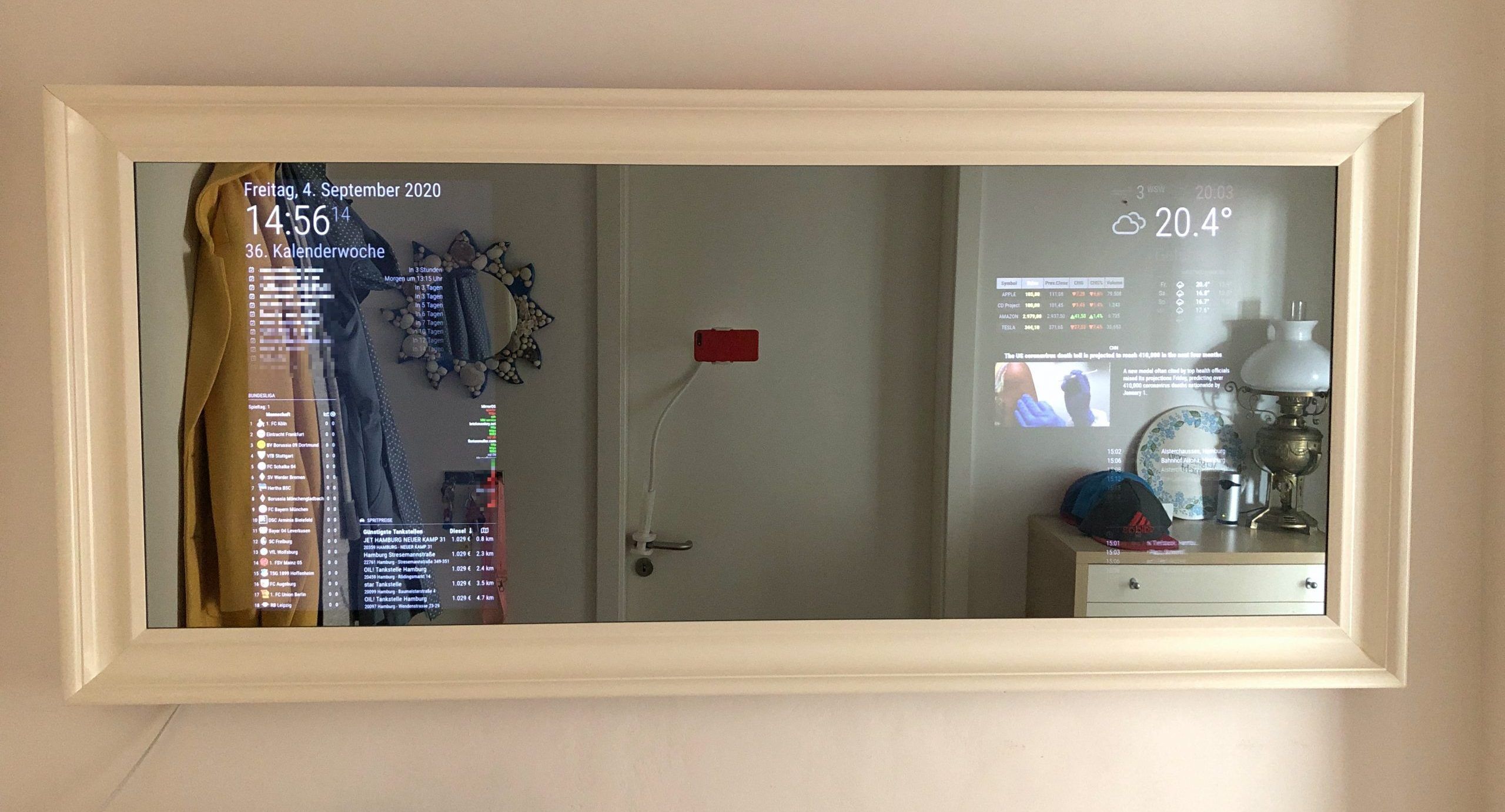
Pihole is great, little hardware projects are fun (touchscreen calendar in the kitchen). They also make great emulators for old systems if you want to install a gaming oriented OS like retropie or lakka and get a gamepad or two.
I personally wouldn't use it for a server, but it's a good learning environment to figure out how to run services.
The beauty of the pi is it is an SD card swap away from doing a different job. You can buy a few fast cheap 16-32gb SD cards and play around with different options and operating systems.
Or you can do what I do: get it all set up, shut it down, and forget it exists until you have some wild idea.
I use mine as a low power server. Whenever I feel like tinkering with a website or something, I can just ssh into it without thinking about electricity usage. Jellyfin and such is also a good usecase
A Pi 4 can do quite a bit. Maybe start off with some Docker apps. Try and host PiHole for ad blocking at home?
Bird-Pi
Look into volumio to make a whole home music streaming solution. You can buy various pi Hats to get better DACs than the internal pi one.
They are nice for keeping tools around on spare SD cards that you might not want to run normally. Like that is a good way to look at Parrot or Kali Linux setups.
Checking out how to build an OS from scratch is also handy. It can be an interesting low risk way to explore building Gentoo, Arch, or Linux From Scratch.
The main appeal IMO, is that you have microcontroller like input, output, and serial communications already setup in the kernel with access in user space. As long as the kernel is supported by the Rπ foundation, (it is proprietary undocumented hardware that only they can support), you are getting the security updates required to keep the thing online automatically and safely. The best stuff to build is unique stuff for you that uses these aspects. Like make a little bathroom clock with a little TFT LCD display that tells you the local weather. Then set up some RSS feeds for local community stuff you do not want on your main mobile device, like maybe local political activity, library and community center events, concerts, clubs, etc.
For server stuff, I would stick with devices with purpose built hardware. Like, a micro SD card is slow and unreliable, and the lack of nvme is bad. In most cases it is cheaper to use other old devices that already have screens unless you want to share a hardware design that is repeatable, you need something secure to keep online, or you need serial or input/output. Those are the main benefits.
The thing is, the Rπ is what it is. It is the path of least resistance. The software support is approachable and great. The price is cheap. However, the non profit thing is a scam. The Rπ foundation is basically an arm of Broadcom. The Rπ is a chip from a set top TV box with 3/4 of the die unused. Broadcom uses excess fab capacity to make the Rπ chips and sell them at materials cost. This is not charity. It is controlling the grass roots market to make competitive scaling business ventures difficult. This is why Rockchip is not crushing them already. The Rockchip RK3588 chip is fully documented and open source. In this space, there is little to no innovation, it is only about price on ancient trailing fab nodes. This is the ladder to climb that leads to Intel, AMD, Samsung, and Qualcomm. The Rπ is the guy kicking anyone that tries to climb. So... use it for what it is good for, but in most cases, other hardware is better, and there is nothing wrong with saying so, or moving past the Rπ. I'm lying next to a RK3566 machine right now, sorting out issues with the ARM version of Fedora Workstation, looking at how to build the native WiFi module for it from source, and maybe try debugging an issue in that module's code that is causing a memory race condition. Although that last one is past my typical pay grade. - So I'm not all fluff here.
That is just my $0.02.